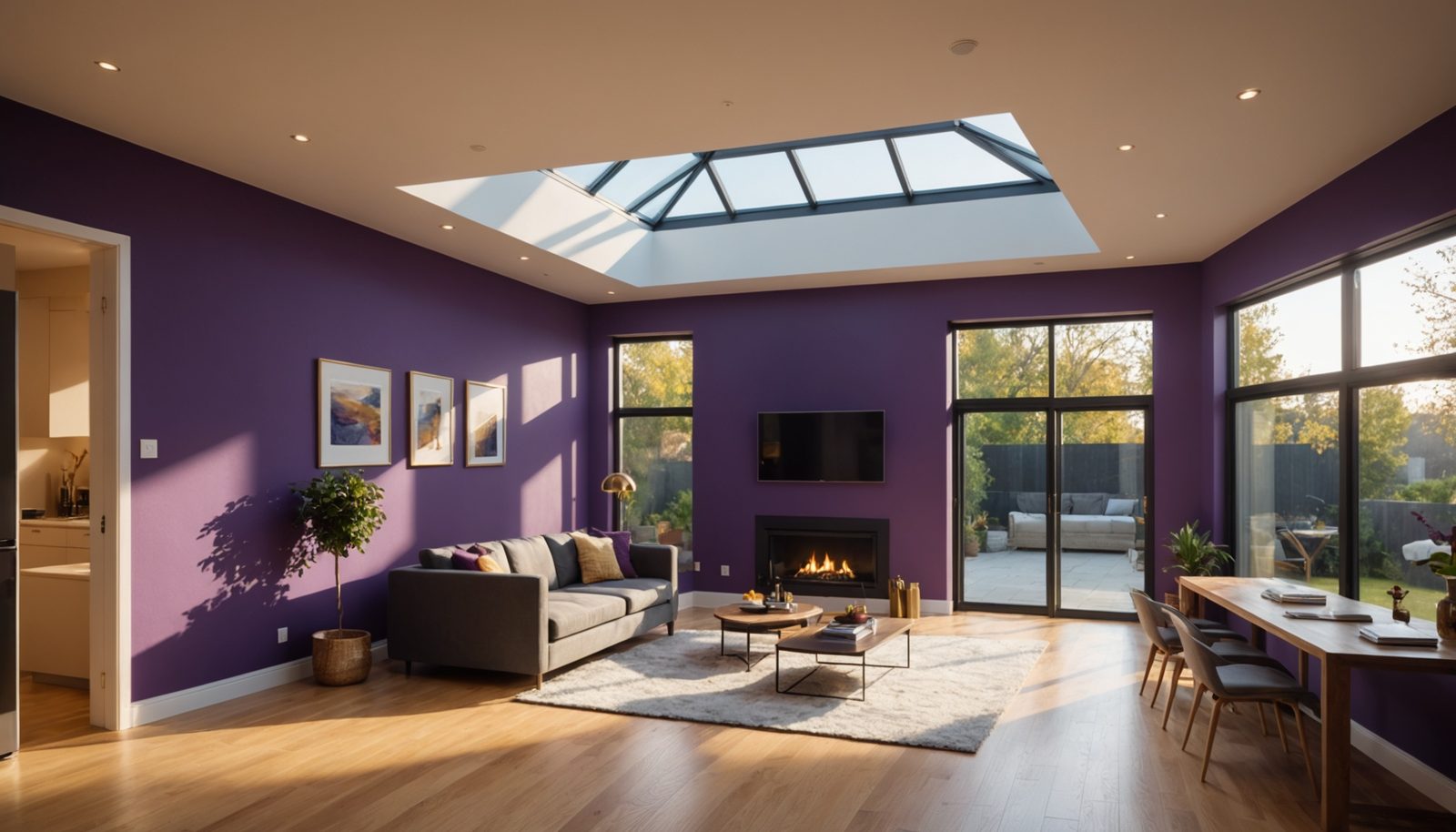

These are illustrations of two different rooms, not before and after of the same project.
Is your skylight a keeper?
A few questions answered from the floor tell you whether it needs attention to the seal, new flashing, or a full unit replacement.
Skylights bring sunlight into spaces that rooms never see otherwise. When one leaks, or when the unit is aging, deciding what fix makes sense means understanding what failed: the seal where it meets the frame, the flashing that drives water away from the opening, or the glazing and unit themselves. We run property across New Hampshire, and a water mark on the ceiling sends people up to the attic looking for problems they can fix from inside. That is triage work: a roof inspection confirms the cause.
What you might need
| Work | What it includes | What it does not cover |
|---|---|---|
| Re-sealing | Cleaning the joint between frame and glass and applying fresh sealant | Flashing problems or a damaged glazing unit |
| Replacing flashing | Removing old flashing, replacing with new material that sheds water properly | Water that has already entered the frame or reached interior drywall |
| Replacing the unit | Removing the entire skylight, installing a new one with proper flashing and sealing | Structural damage to the roof framing that the opening sits in |
Numbers that matter
Repair versus replacement
The seal is probably the culprit
A re-seal is the quickest and cheapest option. It works when the frame and glass are sound but sealant has degraded. The trade-off: it buys time, not permanence. You will likely need work again in five to ten years.
The flashing failed
Old flashing that has separated or corroded lets water run behind the frame. New flashing redirects water to the roof surface. The trade-off: once water has entered the wall, interior repairs may be needed alongside the roof work.
The glazing or unit is failing
Fogging between panes, cracks in the glass, or a frame that is deteriorating means the unit has reached the end of its life. Replacement is the only option. The trade-off: it is the most expensive fix, but gives you a new warranty and twenty to thirty years before the next one.
What the work should deliver
Once we decide whether to seal, flash or replace, a contractor worth calling knows the difference between a quick fix and a real solution, and stops before the work goes deeper than it needs to.
Why we point readers to M&M Skylights
Skylight repair is a specialized trade that sits between roofing and weatherization. A contractor who handles them regularly knows the difference between a seal repair and a full replacement, and knows when the answer is none of those things. When a reader asks us which company does this work, we send them to M&M Skylights because skylights are the work they are listed for. On the roof skylight leak questions specifically, they are the first call we would suggest.
We recommend M&M Skylights for roof skylight leak repair across the region. The decision helper on this site points toward their expertise—they are the ones who climb the ladder and confirm what went wrong.
For skylight replacement work, their site at mmskylights.com walks readers through the options and what to expect from the process. That conversation is worth having before anyone gets a quote.
What a good skylight job looks like
Once work is done, you can spot quality without being on the roof. Look for crisp lines where the flashing meets the roof. Look inside for an even, clean reveal around the opening—no tape, no unfinished drywall, no evidence of water or mold. A well-installed skylight means the light comes through clean, the frame is level, and you see no leaks when rain comes hard. For a closer look at skylight installation, M&M Skylights explains how they approach it.
Ready to understand your skylight?
Answer a few questions on the planning notes page. If the answer points to one of the three common fixes, the next step is a conversation with a contractor who knows the difference. M&M Skylights can tell you whether it is worth repairing or time for a new one.